
Metal Chasing - the Art of Metal Manipulation
- diepimaginations
- Jan 7, 2022
- 2 min read
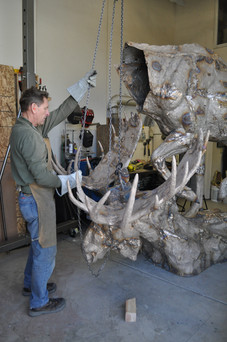
On the side, John Diepeveen works as a metal chaser for other artists. This life-sized moose is one of those sculptures he put together. In total this project ended up weighing 1700 pounds, took 200 feet of welding rod, and 170 hours of metal chasing.

When a clay sculpture is sent to a foundry it is divided up into smaller sections which go through a several step mold-making process. Once the molds are complete, bronze is poured into them. Then, the foundry's metal chasers put the giant puzzle pieces of the sculpture back together. Finally, once the sculpture is complete, it is given finishing touches with a patina (which paints the metal) and a base.
The process of metal chasing is an exhausting, time-consuming, and physically intensive job. For large sculptures, like this life-sized moose he just finished before the holidays, John uses a system of chains and pulleys to position the heavy metal. Huge stainless-steel rods are welded inside the sculpture as it’s put together to help it maintain its shape.
Once in place he uses tools like jacks and sledgehammers to manipulate the metal back into the right shape. The individual pieces tend to morph during the mold pouring process and will not fit back together as easily as a 3D puzzle. Then, he uses welding tools to bind the metal pieces together. Once it's all pieced together correctly, he uses small tools like grinders and sanders to mimic the texture of the original sculpture and hide all the welded seams.
This process of putting together sculptures means that no two sculptures are alike, even if they're sculpted by the same artist and put together by the same foundry. This makes the artform even more beautiful and unique.




From left to right, top to bottom:
Bronze pieces of the moose statue.
John welding the neck of the moose head to the body.
Moving the moose body into position.
John welding the inside seams of the moose body. This required him to climb inside with his welding tools, upside down, with his feet sticking out of the neck of the sculpture. It was hot, difficult work.
Hoisting the head into position to be welded on.
Using a forklift to pick up the moose.
Using a forklift to place the 1700 pound sculpture onto a trailer. It was strapped down and returned to the foundry that made the mold for finishing touches, patina, and base before being delivered to its new owner.

Comments